

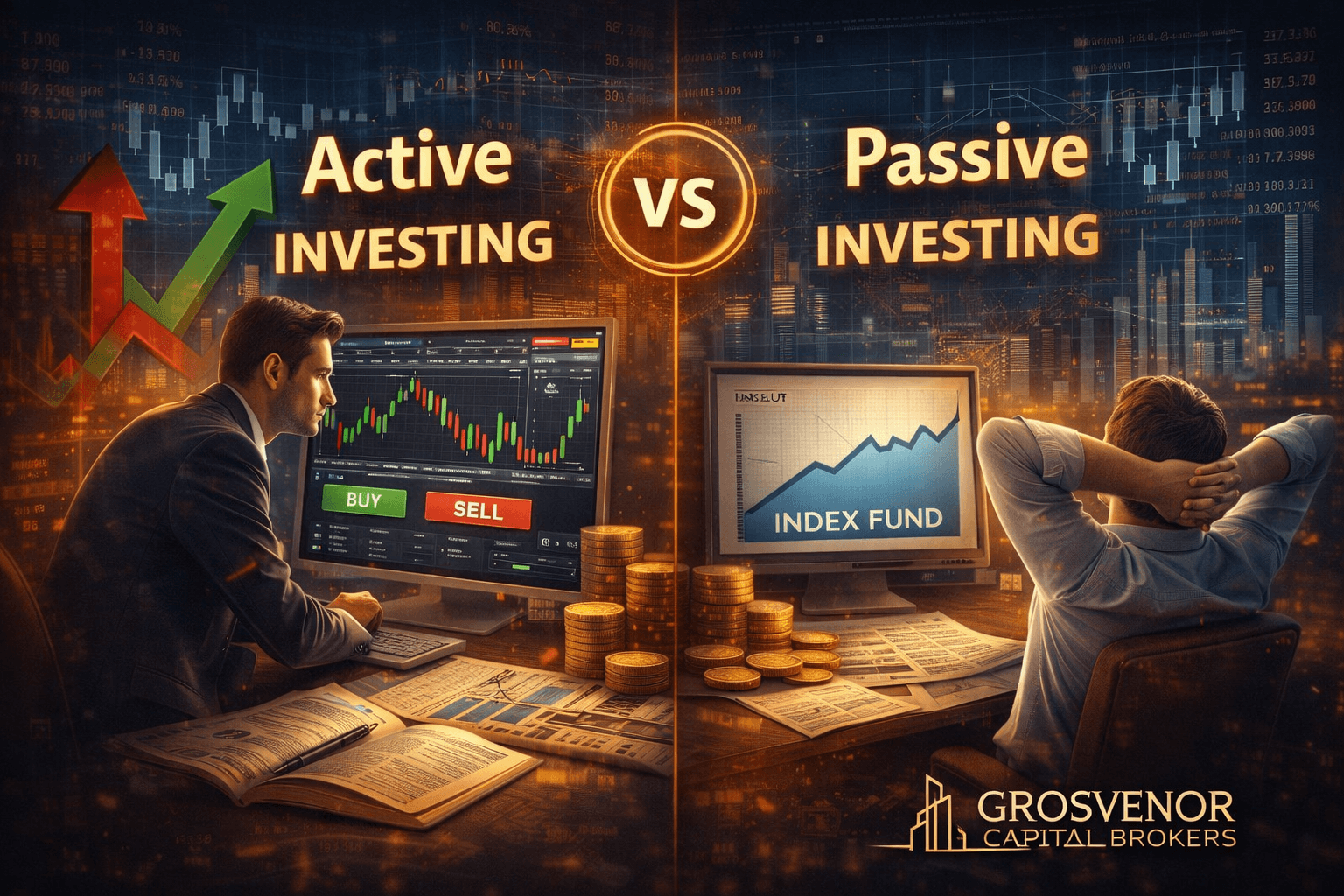
Many have differing views on whether active or passive investing is the most effective, so do your homework and know what will work for you and your financial goals.
QUOTE
“If you aren’t willing to own a stock for ten years, don’t even think about owning it for 10 minutes.”
Warren Buffet
Which one should you choose? Active or passive investing?
Should you try and beat the market by pursuing an active investment strategy, or should you buy and hold a diversified portfolio of low-cost index funds?
Here we explore both sides and help you decide which approach might be best for you. Make sure you reach the very bottom because we’ve prepared a list of questions to help you find out all there is about both strategies!
Big ideas
- An active investment strategy aims to outperform the market. If you have high-risk tolerance and are looking to make high returns, active investing could be for you.
- Passive investing offers lower returns than the best active strategies but often higher than the average active strategy. It usually means less risk and more portfolio diversification.
- The main difference between active and passive investing is that active investing is a “hands-on” approach, whereas passive investing is a “hands-off approach” to making investments.
Active investing explained in simple terms
Active investing is a type of investment strategy that includes choosing individual stocks and actively managing a portfolio. The goal is to beat the market.
Active investing aims to outperform a benchmark index of stock market performance. It requires a far more in-depth study and the skill to know when to pivot into or out of a specific stock, bond, or asset.
DEFINITION
Active investing involves actively buying and selling assets to make profits and outperform the market.
While it can be very rewarding, active investing is more complex and risky than passive investing. To be a successful active investor, you must have a strong understanding of the markets, a solid grasp of both fundamental and technical analysis, and the willingness to put a lot of time and effort into research and analysis.
One of the primary advantages of active investing is the potential for higher returns. Active investors can earn returns that outpace the broader market by making informed, well-timed investment decisions. However, this comes with the risk of underperforming the market when the wrong investments are chosen.
To have active investing explained better, let’s consider John, who has been an active investor for the past ten years. He is only interested in the technology sector. Instead of buying a diversified technology ETF, he actively manages his portfolio by selecting individual tech stocks.
After extensive research and analysis, John believes that Company X, currently trading at $50 per share, is undervalued and has strong growth potential. He purchases shares of Company A and holds onto them for several months. As the company’s financial performance improves, the stock price rises to $75 per share, and John decides to sell his shares for a profit of 50%.
In this example, John, an active investor, achieved a higher return than he would have by investing in a diversified tech ETF. However, this approach also came with greater risk. It required a significant investment of time and effort in research and analysis, and naturally, the investment might not have worked out, and he could have made a loss.
Chart: Tech stocks vs S&P 500
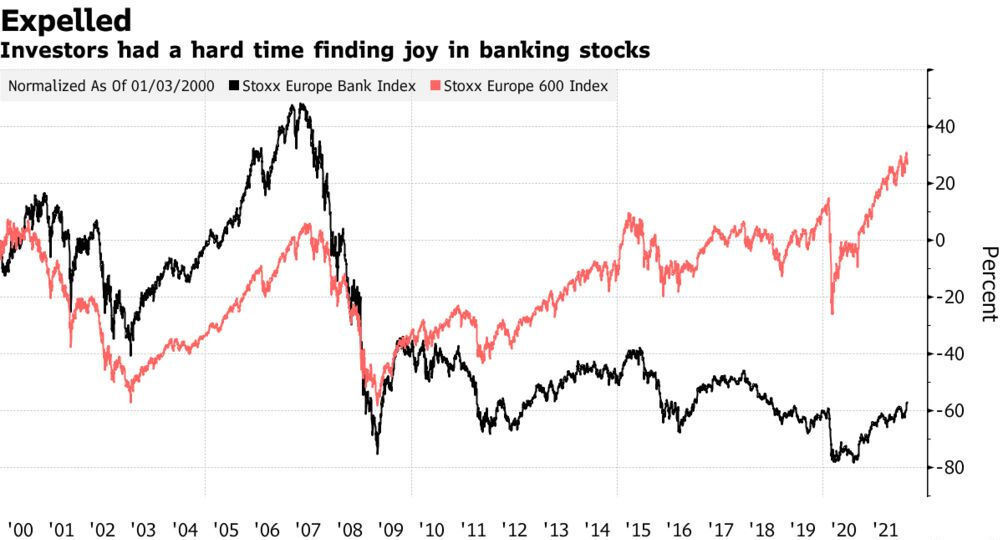
The figure above shows the return of several high-flying tech stocks vs the SPDR S&P 500 ETF Trust, an exchange-traded fund that trades on the NYSE Arca under the SPY symbol.
As you can see, all individual stocks have outperformed the ETF. That means an active investor who has constantly been buying and selling these individual stocks over the years has been better situated than another investor who chooses to invest in an ETF rather than buying and selling individual stocks. This is, of course, a scenario in which the active investor has the necessary skills to choose these top stocks to invest in.
It was a very different story for the active investor who decided to invest in bank stocks over the same period.
Total returns: individual companies vs S&P 500
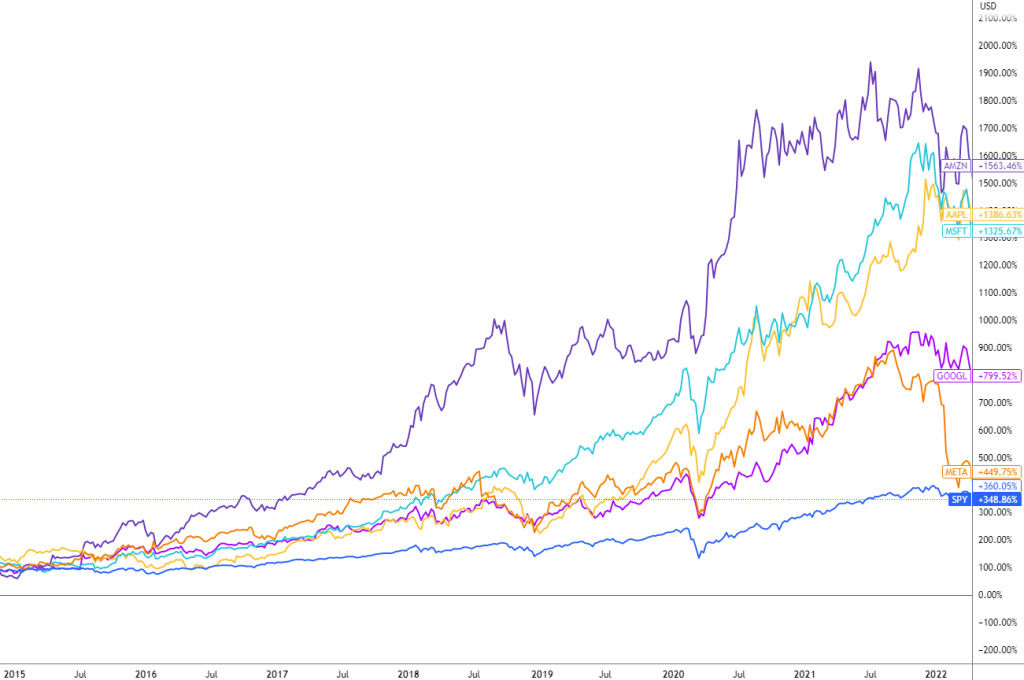
European bank stocks underperformed the Stoxx Europe 600 Index for more than a decade following the 2008 financial crisis.
Active investing can be profitable if you invest the time and effort required for research and analysis. However, it also involves high risk and complexity, and success is far from guaranteed. It’s essential to carefully consider your goals and risk tolerance before pursuing active investing.
Passive investing explained in simple terms
Passive investing is a strategy that involves buying and holding a diversified portfolio to replicate the performance of a particular market index or benchmark. The lower activity minimises the costs associated with buying and selling.
Those who pursue passive approaches aim to maximise their long term exposure to the market with regular investments and minimise transaction costs. Passive investors usually invest in line with a benchmark index and hold the investments for a long time while simultaneously reinvesting the dividend payments.
This is most easily done by investing in funds that track a market or index. These funds are known as index funds or exchange-traded funds (ETFs).
DEFINITION
Index funds are passively managed mutual funds that hold a basket of securities that track a specific market or index, such as the S&P 500.
ETFs are traded like individual stocks and hold a basket of securities that track a particular market or index.
By investing in an index fund or ETF, you can own a small piece of many companies in a particular market or index. Instead of placing all of your money into one stock, you can benefit from the risk-reducing effects of diversification by spreading your assets over several different stocks.
To have passive investing explained, meet Jane, who has been investing in index funds for the past five years. Being a nurse means she has very little spare time to research specific stocks or attempt to ‘time the market’.
Instead, Jane adds a fixed monthly sum of money into an S&P 500 index fund. The S&P 500 is a popular index that tracks the performance of 500 large-cap stocks in the United States. By investing in an S&P 500 index fund, Jane has a diversified portfolio of companies across various sectors.
The minimal fees associated with passive investing are another benefit that Jane appreciates. She knows that actively managed mutual funds may impose fees, reducing the total amount she earns. Instead using an index fund, which incurs a far lower management cost, enables her to maintain a greater portion of her capital committed to the market.
By staying the course and investing regularly, she has achieved steady returns and progress toward her long-term financial goals.
Three main pros and cons of active investing
✔️ Higher returns
Assuming some minimal degree of financial competence, it is possible to produce significantly higher returns with an active vs passive approach. Active investing, when practised correctly, can provide higher returns to the market as a whole.
✔️ Flexibility
You have much more flexibility to choose the companies you want to invest in and make changes to their portfolios as market conditions change. For example, if you believe you have found ‘the next Tesla’ you can quickly allocate parts of your portfolio to that specific company.
✔️ Hedging
This can be done using various hedging strategies, such as short sales or by buying inverse ETFs (for example, an inverse S&P 500 ETF that makes money when the index falls but loses money when it rises) and they can also abandon certain stocks or sectors when the associated risks become unacceptable.
What are the three disadvantages of active investing?
❌ Higher cost
It requires more research and analysis, which translates into higher costs. Additionally, fees are involved with buying and selling stocks, which adds up to cost. So, is passive investing cheaper? Yes, it definitely comes at a lower cost.
❌ Higher risk
The higher potential returns come with a higher degree of risk. If you select the wrong stock, you can lose a significant portion of your investment.
❌ Higher taxes
The active buying and selling strategy will likely add to the capital gains tax bill you pay each year. Usually, as more investment takes place, the higher the tax bill will be.
Active vs. passive investing: What’s the difference?
Active and passive investing are opposing strategies when putting money to work in the markets and generating returns. While both measure their success against popular benchmarks like the S&P 500, the difference between active and passive investment strategies is that the former seeks to outperform these benchmarks. On the other hand, the latter aims to match the benchmark.
Passive vs Active investing
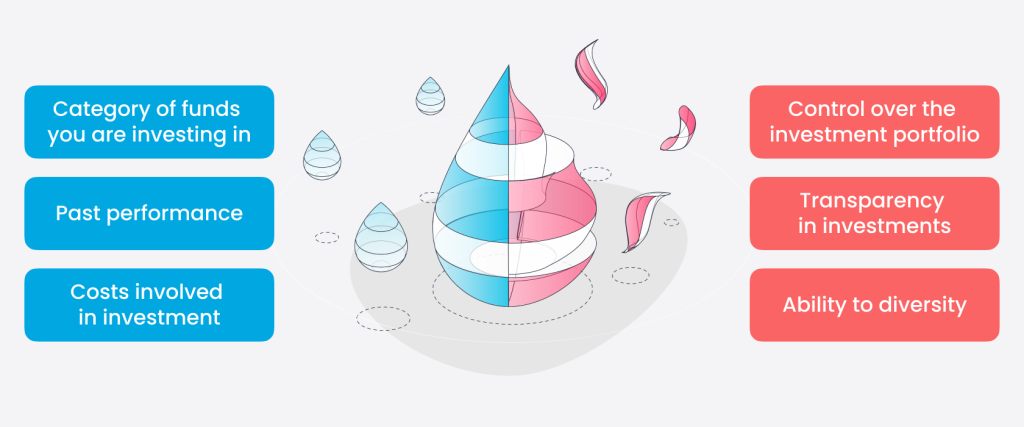
An Active investing strategy describes a more proactive approach to managing an investment portfolio. It requires a more hands-on approach as the goal is to perform better than, or “beat,” the market. If you decide to go for it, you should spend a significant amount of time researching and conducting analysis on hundreds of companies and industries simultaneously to find the ones more likely to beat the market.
The most successful active investment managers possess a skill set of a depth of knowledge about the markets, years of experience, knowledge of efficient risk-management procedures, and an analytical mentality that enables them to take prompt action on well-thought-out ideas.
A passive investing strategy is a hands-off approach to managing your money. The objective of passive investing vs. active investing is to mimic, not beat, the returns of the appropriate benchmark index. Utilising index funds is a common way to achieve this goal. Stocks and bonds that are a member of the benchmark index make up the assets that make up these funds.
Passive approaches focus on the long-term buying and holding of assets. You pick an asset and then hold on through ups and downs with a long-term objective, like retirement.
Recap
Are you torn between active and passive investing? The first aims to outperform the market, while the second aims to match it. Active investors may generate higher returns but face higher fees and greater risk. Passive investing offers low fees, greater diversification, and more consistent returns.
So, which approach is right for you? If you’re looking for higher potential returns and are willing to accept higher fees and greater risk, the active option may be the way to go. A passive approach may be a better fit if you’re looking for a low-cost, diversified portfolio with more consistent returns over the long term. Of course, you can do a bit of both too!