

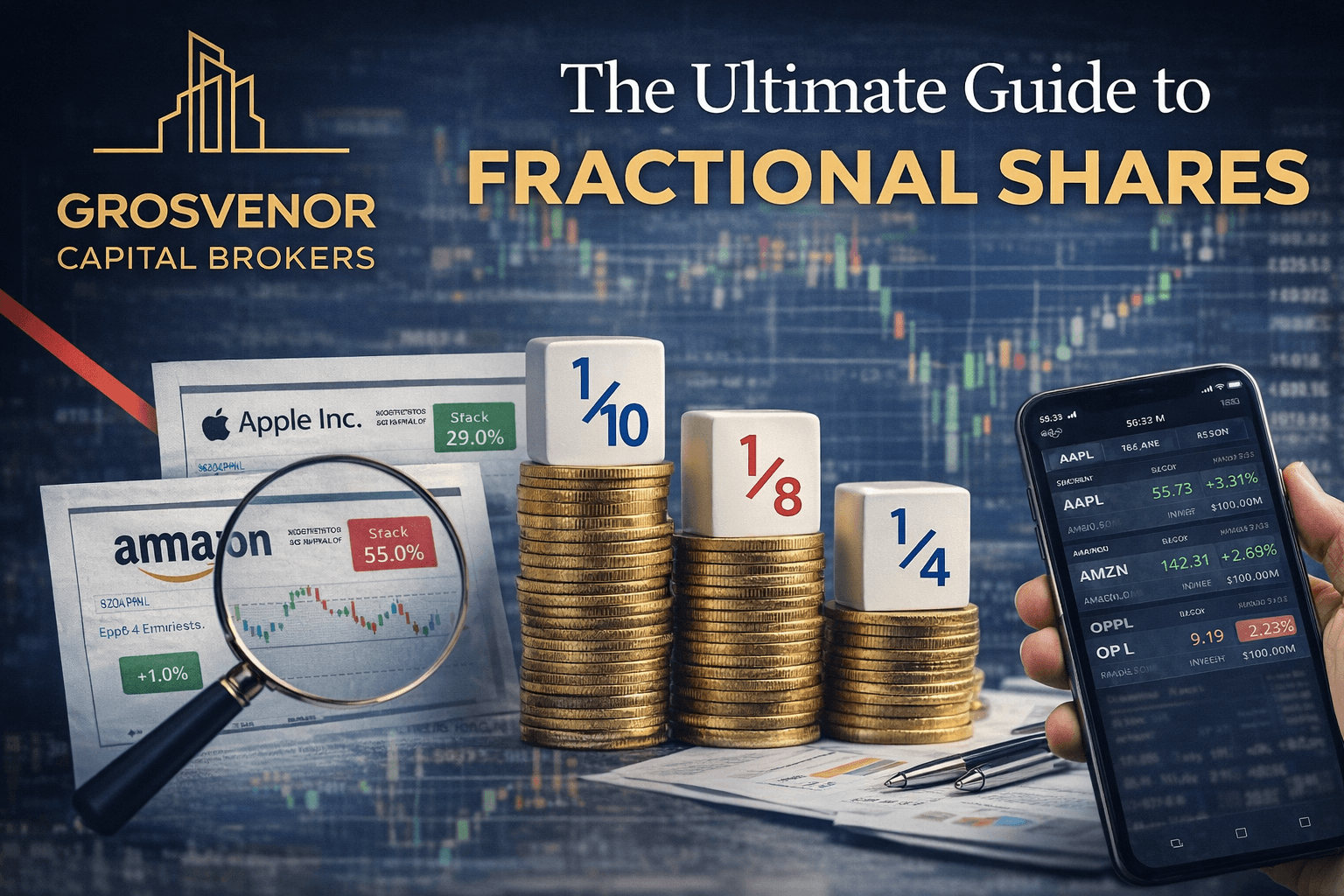
There was once a time when entry into the financial market was difficult for regular investors. Fractional shares helped to change this in a big way by facilitating the buying and selling of a “fraction” of a share.
DEFINITION
Less than one full share of equity is called a fractional share.
Investopedia
This guide will run through fractional shares in-depth, including examples, pros and cons, and the circumstances in which this feature can be handy.
Big ideas
- Fractional shares can help you to make the most out of your investment allocation – you don’t have to save up the full amount before you buy a high-priced share.
- Fractional shares have helped retail investors access markets that previously had high barriers to entry.
- The ability to trade fractional shares is not a means of profitability in and of itself. It simply allows for increased diversification and flexibility of existing funds.
What are fractional shares?
A fractional share is any share quantity less than one. Rather than owning a total share of stock, you own a partial one – a fraction priced based on its relation to the whole-share value.
For example, if Apple (AAPL) traded at $150 and you own a 0.5 fractional share, your position is worth $75. Stock positions include fractional shares and whole-share quantities, so if you own 1.5 shares of AAPL, your investment is worth $225.
A history of fractional shares
Fractional shares took on a new meaning in 2019 when trading platforms offered customers the ability to purchase fractions of shares directly. This directly appealed to millennials and younger generations who wanted to make the most of their existing funds, which was likely to be of a lower total volume compared to established market participants.
Fractional shares were initially popularised by trading applications geared towards a millennial audience. But soon enough, larger names entered the fray. Robo advisors, trading applications, and financial institutions now offer fractional shares.
Fractional shares first occurred when the investment world was largely being redefined, with zero-fee trades and crypto products also on offer to lower entry barriers. It also occurred around the same time as an anti-wall street movement initiated through Game Stop stocks.
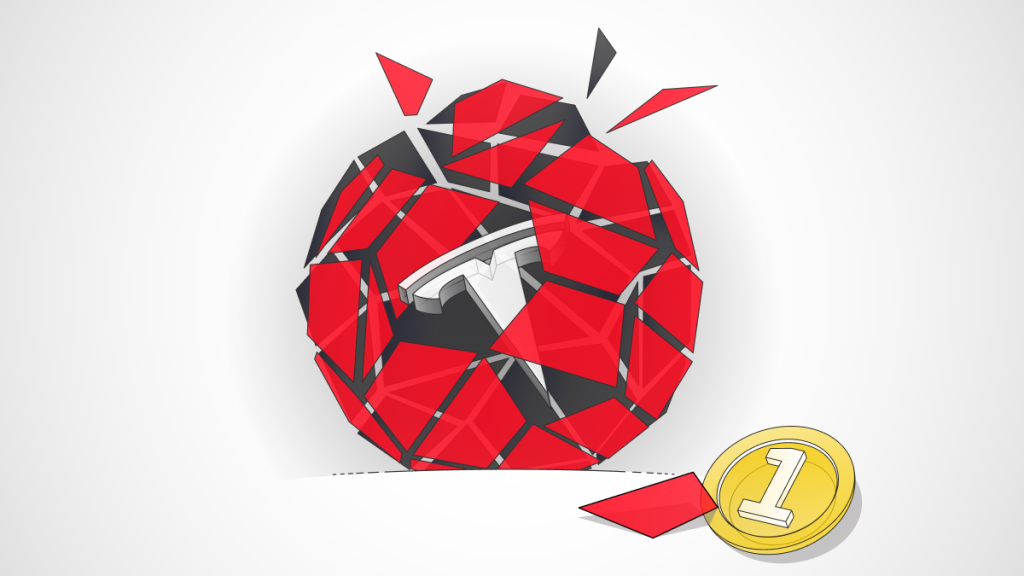
It’s worth keeping in mind that fractional shares have been around for a long time. Mergers and acquisitions, stock splits, and dividend reinvestment plans often resulted in fractions of shares being left over. These were viewed as something of a nuisance, being difficult to trade.
Fractional shares are also sometimes described as stock slices or fractional shares of stock. The whole share is being divided up into slices. But it’s often not as neat as cutting a pizza.
Fractional shares can sometimes be 1/100,000 of a share. In most instances, however, a high value stock might be in the region of $250 – $500 (Netflix, Costco, Microsoft, etc). So a division might be 5% – 50% for a fractional share of such stocks.
Fractional shares example
It’s easy to explain how fractional shares operate in practice.
EXAMPLE
You might have £1000 to start your portfolio.
However, AutoZone (AZO) has a price of $2,348 per share (April 2023).
Traditionally, this would price you out of the market, and you would have to wait before investing, potentially missing out on any price appreciation.
These fractional shares would also be liquid, while they were much more difficult to trade or use in the past.
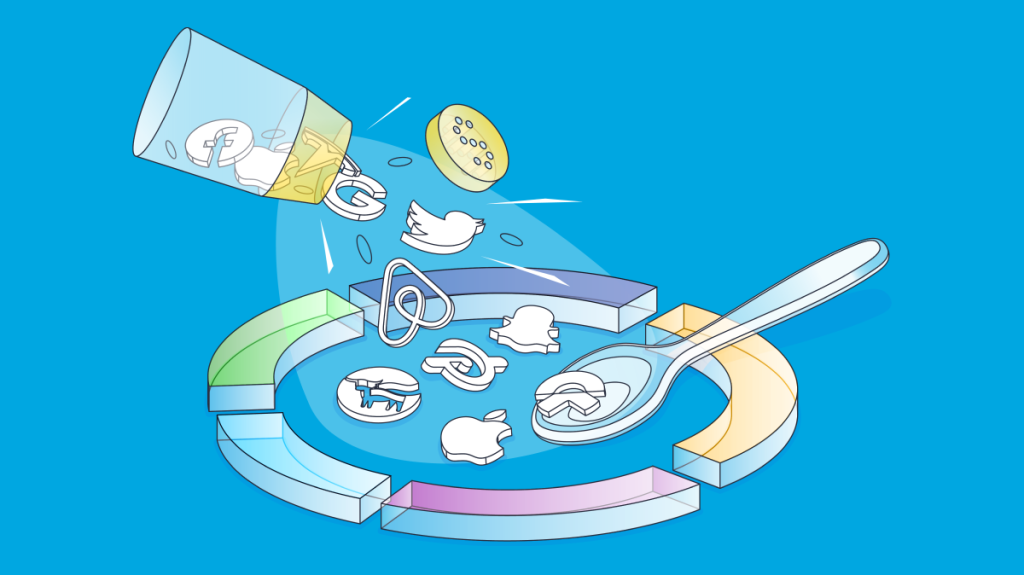
But even if you have $1 (and sometimes less) to invest, it can be put towards a large variety of shares. The ability to purchase fractional shares of stock makes it far easier for retail investors to manage their funds and access a previously restricted market, often through an intuitive mobile application.
Fractional Shares of ETFs
The popularity of fractional shares is not limited to stocks. In fact, the application of fractional investment in exchange-traded funds (ETFs) really helps laypeople access the financial markets. ETFs track a diversified basket of securities at a low cost. But they can be traded with the ease of stocks. Each EFT will have a stock ticker available for trade on exchanges.
DEFINITION
Exchange traded funds are a type of investment fund that offer the best attributes of two popular assets: They have the diversification benefits of mutual funds while mimicking the ease with which stocks are traded.
NerdWallet
An additional benefit of ETF investment is that you can still benefit from stock dividends, even if they do now own the underlying stock. If you want access to a specific industry, such as energy, the environment, the UK bond market, or US tech stocks, you can do so at a much lower price than purchasing each security individually.
Many ETFs now trade commission-free, and such funds have lower capital gains tax than actively managed mutual funds. As many ETFs are passively managed, expense ratios tend to be quite low. Fractional investment in ETFs is a great way to gain diversified access to multiple securities at a great price.
The pros and cons of fractional shares
All investment mechanisms have distinct advantages and disadvantages, and fractional shares are no exception.
The main benefits of fractional investing are:
✔️ Increased diversification for the same amount of capital across stocks and industries.
✔️ Allows market entry with a reduced amount of funds.
✔️ Faster than waiting to build up the total value of a full share.
✔️ Well suited to dollar cost averaging and other long-term investment strategies.
The cons of fractional investing include:
❌ A stock becoming affordable doesn’t make it a good buy. Just because you can get something cheap does not necessarily mean that you should!
❌ Fractional investing may lead to carelessness in the sense that few will care about losing $5 on a stock. But these small losses can add up.
❌ Just because a stock is priced high does not mean it is a good purchase. It’s better to invest in a low-priced stock that increases than a high-priced stock that falls. This point can be missed in all the hype.
The idea of fractional shares is that it’s simply a useful feature that allows access to the market, for specific stocks, at a lower price. As with all tools, the main thing is how you use them.
Nothing is ever guaranteed, especially in the world of trading.
When are fractional shares appropriate to use?
Another name for fractional shares is dollar investing. Because you can select a specific dollar (or Euro or Pound Sterling) amount regardless of the stock’s price. This makes fractional shares a perfect vehicle for dollar cost averaging, where you buy a specific amount at specific intervals.
You might choose to invest $1,500 every three months in five different, diversified ETFs.
This equates to $300 per ETF every three months.
Each ETF can target a specific industry or be made to diversify across industries.
Fractional shares are a bad idea for those lacking emotional maturity or a long-term strategy. Ease of investment can be a pitfall in a world of hype and media marketing. It’s also relatively easy to trade $5 to $10 on a daily basis from a smartphone without doing the necessary research.
QUOTE
“The individual investor should act consistently as an investor and not as a speculator.”
Benjamin Graham
Young people especially are prone to read sensationalist news articles and allocate their funds to a specific stock, often on the same mobile device. Sometimes, high barriers to entry force an individual to think long and hard about a particular investment. The extra time it takes gives you a chance to either abandon the idea or proceed based on a stronger, more reasonable foundation.
Fractional shares dividends
Fractional investing allows you to benefit from dividends just like ordinary stocks. This is the case even with ETFs, where you do not own the underlying stock itself. However, it’s important to realize that not all stocks actually pay dividends.
You can research which stocks tend to pay dividends, and incorporate this into a dividend reinvestment plan and/or dollar cost averaging strategy. Dividends can be calculated by multiplying the dividends per share by the total shares you own.
FORMULA
Total Dividend Amount = Dividends Per Share x Total Shares
Defensive stocks are those that tend to pay dividends. These major corporations with a strong track record of paying out dividends are highly unlikely to go bankrupt due to economic conditions.
This includes McDonald’s, Johnson and Johnson, Coca-Cola, and Microsoft, who have a track record of paying dividends on stocks. But many companies (such as Google and Amazon) can also choose not to pay dividends, reinvesting the profits into the organisation.
A company might pay a 5% annual dividend on a stock in a given year. If you fractionally invested $500 in this company priced at $1,000 per share, you would get $25 at the end of the year. It might not seem like much, but it all adds up with compounding interest year on year.
Fractional shares UK
Fractional trading is most popular in the USA due to the high share price in this region. Grosvenor Capital Brokers Limited offers fractional shares listed in the US, UK and internationally.
Grosvenor Capital Brokers Limited is an established fractional share brokerage in the UK. Users can invest as little as £1 in fractional shares and set up a recurring automatic schedule with Pies&AutoInvest. Over 7,000 stocks and ETFs are on offer with zero commissions.
UK customers can access fractional shares and ETFs for international stocks through UK brokerages. Before signing up, it’s important to consider what you are looking for so you don’t get hit with fees or charges down the line. There is a provider for everybody, but you need to know what you’re looking for first.
Recap
Fractional shares are a great way to purchase smaller pieces of a company or ETF that has a large share price. This features lowers the barriers to entry and enables increased diversification of assets.
But democratising market access does not automatically mean an increase in profits, and fractional trading should be used in tandem with research, due diligence, diversification, and time-tested investment principles.